Yes, fall is one of the best times to drive Route 66, and October is the sweet spot. Leaves peak in Illinois and Missouri in mid to late October, and the Mojave cools from July averages near 111°F at Needles to about 90°F.
November still works, but it asks more of you: snow becomes likely around Flagstaff and Williams at close to 7,000 feet, the days run short, and some small-town stops trim their hours. If you can pick only one fall month, pick October.
I'm Helena, and I wrote the Field Manual after driving the whole road from Chicago to Santa Monica. Below are the real numbers, stop by stop, so you can decide when to leave and which way to point the car.
Is October a good time to drive Route 66?
October is the month when the two ends of the road finally agree with each other. Chicago still averages highs in the low 60s, and the desert stretch in California no longer punishes you for stopping to read a historical marker. That balance almost never happens in summer, when the Midwest is humid and the Mojave is dangerous.
The trade-off is planning. You are racing two clocks at once: leaves that fall in the East and early snow that can show up in the Arizona high country. Leave Chicago in the first half of October and you catch both ends in good shape.
Route 66 weather in October and November, city by city
These are the official 1991 to 2020 climate normals from NOAA, rounded to the nearest degree. They are averages, so a single cold front can push any of them well down for a few days. I added July for comparison, because that is the month most people picture when they imagine this drive.
| Stop | October avg high / low | November avg high / low | July avg high |
|---|---|---|---|
| Chicago, IL (O'Hare) | 63°F / 45°F | 48°F / 34°F | 85°F |
| St. Louis, MO | 69°F / 49°F | 56°F / 37°F | 90°F |
| Tulsa, OK | 74°F / 51°F | 61°F / 39°F | 94°F |
| Amarillo, TX | 73°F / 45°F | 61°F / 34°F | 93°F |
| Albuquerque, NM | 71°F / 46°F | 57°F / 34°F | 91°F |
| Flagstaff, AZ | 64°F / 32°F | 52°F / 23°F | 82°F |
| Williams, AZ | 67°F / 36°F | 56°F / 28°F | 84°F |
| Needles, CA | 90°F / 65°F | 75°F / 53°F | 111°F |
| Barstow, CA | 81°F / 53°F | 68°F / 42°F | 102°F |
| Santa Monica, CA | 68°F / 59°F | 67°F / 54°F | 69°F |
Look at the Flagstaff lows. An October night there averages right at freezing, and November nights average 23°F. Pack a real jacket even if the rest of the trip feels like sweater weather.
The Mojave in fall versus July
Needles is the hottest stop on the whole route, and it is the best argument for a fall trip. The July average high there is 111°F, and the average July low is 87°F, which means the desert barely cools off at night. In October the average high drops to 90°F, and in November to 75°F.
In July a breakdown between Needles and Barstow can turn into a medical emergency. In late October it is mostly an inconvenience, as long as you carry water. The desert still deserves respect in fall, but it stops being the part of the trip you have to schedule around.
Route 66 fall foliage: Illinois and Missouri
The color on Route 66 lives in the first two states. Once you cross into Oklahoma the trees thin out, and by the Texas Panhandle the show is the sky, not the leaves.
Illinois: early in the north, late in the middle
The Illinois state fall color guide puts the Chicago area and northern Illinois at peak around the second week of October. Central Illinois, where Route 66 runs through Pontiac, Bloomington and Springfield, usually peaks in late October. The state's mix of oaks, sugar maples, hickories and sassafras gives you reds and oranges rather than one flat yellow.
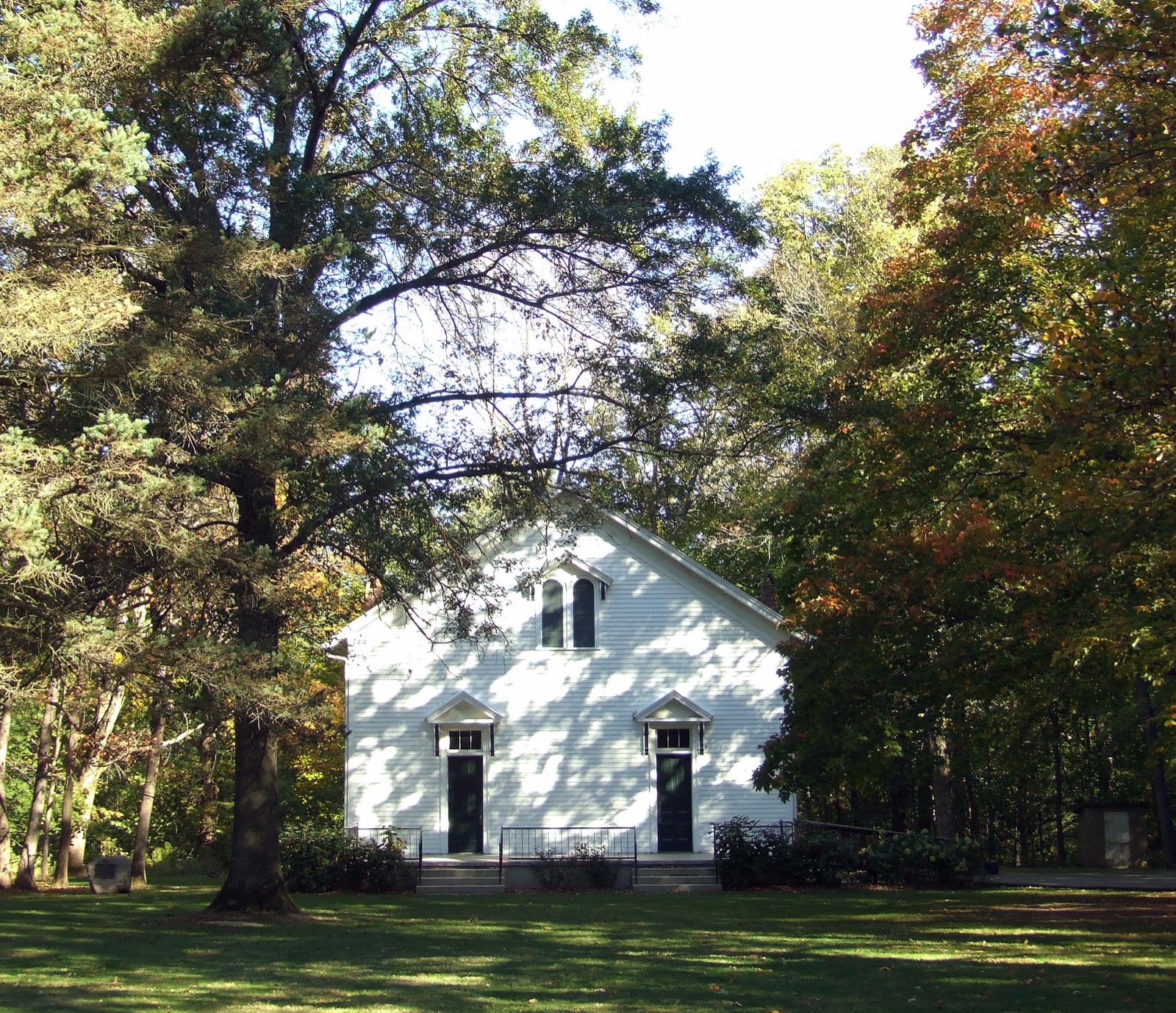
Funks Grove, south of Bloomington, is one of the easiest places to see it. The old road runs right past a stand of hardwoods, and the little white chapel sits in a clearing that turns gold when the timing is right.
Missouri: the Ozarks and Devil's Elbow
The Missouri Department of Conservation says peak color usually arrives around mid-October, when maples, ashes, hickories and oaks are at their best. By late October the colors are usually fading and leaves are dropping, and the season is generally done by mid-November.
The department posts a weekly fall color report from late September to mid-November. Check it the week before you reach St. Louis.
The best stretch is the Ozark section between Rolla and Lebanon. At Devil's Elbow, the old road crosses the Big Piney River on a steel truss bridge built in 1923, three years before the route got its number. Missouri's State Planning Commission once listed the bluffs above that bend among the seven beauty spots in the state, and in October the hardwoods on them reflect in the river below.
Closer to St. Louis, Route 66 State Park in Eureka sits on the Meramec River, with a visitor center in a 1935 roadhouse that stood on the original alignment. It is a good first stop out of the city when the trees along the water have turned.
Route 66 in November: what changes
November is a quieter, colder trip. It can be lovely, but three things need planning that October mostly lets you skip.
Snow in the Arizona high country
Flagstaff and Williams both sit close to 7,000 feet, far above the plains and deserts on either side. NOAA normals give Flagstaff an average of 1.5 inches of snow in October and 8.2 inches in November, and Williams 0.7 and 4.8 inches. That is enough to close roads for a morning or make motel parking lots icy.
If you cross Arizona in November, check the National Weather Service forecast for Flagstaff and the state's AZ511 road conditions the night before. Keep a flexible day in the plan so you can wait out a storm in Williams instead of driving through it.
Shorter days
On July 1, Chicago gets about 15 hours and 10 minutes of daylight. By November 15 that drops to about 9 hours and 50 minutes, with sunset at 4:30 p.m. Daylight saving time ends on Sunday, November 1, 2026, which pulls sunset an hour earlier overnight in every Route 66 state except Arizona, which does not observe it.
In practice, this means fewer miles per day. Old neon signs look wonderful after dark, but unlit two-lane alignments and deer in the Ozarks are a different matter. I would plan every November driving day to end by sunset.
Seasonal hours
Plenty of small Route 66 businesses are run by a handful of people, and they slow down after the summer crowds leave. The Midpoint Cafe in Adrian, Texas, the halfway point at mile 1,139, is listed on the state's Texas Time Travel heritage site as open seasonally from March through October. Museums, trading posts and diners elsewhere may cut days or close early in the off-season.
The fix is simple and old-fashioned: call ahead. A two-minute phone call the day before saves you a detour to a locked door.
Why fall beats summer for crowds and motels
After Labor Day the summer vacation rush winds down. Visit Grand Canyon, the tourism site for the park's gateway area, notes that autumn brings fewer crowds than the peak summer months, along with cooler days. The same pattern helps the classic motels along the route.
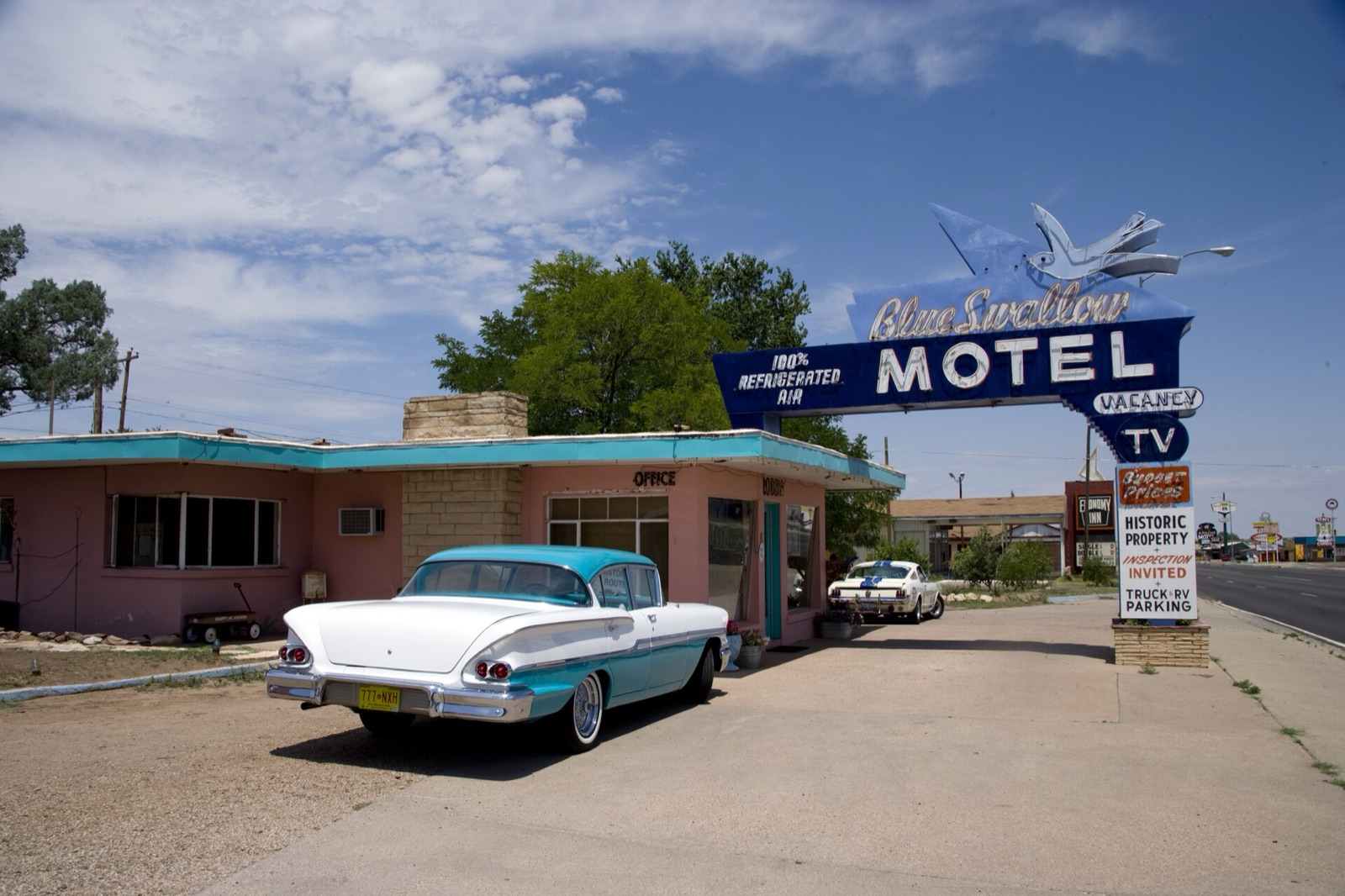
The Blue Swallow Motel in Tucumcari, New Mexico, is a good example: every room has its own garage, and the motel's booking page lists 2026 rates from $119.95 a night. Rooms like that are far easier to book on short notice in October than in July. For a short list of the motels worth planning around, see the Route 66 motels I'd book again.
The Centennial in November
Route 66 was officially established on November 11, 1926, so this November is its 100th birthday. Two of the bigger celebrations land on that exact date. In Springfield, Illinois, the Illinois Route 66 Scenic Byway is holding a statewide conference and centennial celebration at Motorheads, and both parts are ticketed.
In Tulsa, the Oklahoma Route 66 Centennial Commission is planning a birthday bash downtown on Wednesday, November 11, which is also Veterans Day. The day includes live music around downtown and ends with a concert at Cain's Ballroom. Dates and details can still shift, so check the full list in our guide to Route 66 Centennial events in 2026 before you build your trip around one.
A fall Route 66 itinerary that works
For color and comfortable weather, drive westbound and leave Chicago between October 5 and October 15. That puts you in Illinois near its northern peak and in the Missouri Ozarks around mid-October. You reach Flagstaff and Williams in late October, usually before the heavier November snow, and you cross the Mojave when Needles averages about 90°F instead of 111°F.
For a November trip, the order matters less for leaves and more for snow and light. Plan shorter days, keep a buffer day in Arizona, and cross the high country as early in the month as your schedule allows. If you are heading for the Tulsa celebration on November 11, work backward from that date.
Two weeks is a comfortable length for the full drive. The Route 66 road trip planner breaks that down day by day, and if you are tempted to cut time on the interstate, read Route 66 vs. I-40 first.
How the Field Manual handles a fall trip
The things that go wrong on a fall trip are the things a general guidebook or a free blog cannot keep up with: a cafe that closed for the season, a motel that changed hands, a dead zone with no cell signal right when you need directions. That is why I built Route 66, The Definitive Field Manual on what we could verify in person.
I drove the full 2,448 miles from Chicago to Santa Monica over 23 days in April 2026, called the motels, and recorded coordinates on site. Places that have closed are marked closed, like the Cuervo Cafe in Santa Rosa and the River Valley Inn in Needles. Places with uncertain hours carry a "verify operating status before travel" flag, which is exactly the list you want in hand when November hours get unpredictable.
Each of the eight state chapters has its own desert protocol, and the 14-day plan comes with daily budgets of $80, $200 or $400, fuel included. The printed edition works where your phone does not, which is a real advantage in the empty stretches of New Mexico and the Mojave. If you want it before you leave, get the print and digital edition together for $47, with a 14-day money-back guarantee.
The short version
Drive in October if you can, westbound, leaving Chicago in the first half of the month. Drive in November if the Centennial on November 11 is the point of your trip, and plan for snow near Flagstaff, early sunsets and seasonal hours. In both months, call ahead, carry water in the desert, and give yourself more time than you think you need.