The best time to drive Route 66 is May, and the second best is from mid-September through October. In those weeks the whole road is drivable in comfort at the same time: Chicago averages highs around 70°F, the Texas Panhandle is in the 80s, Flagstaff's snow is mostly gone, and Needles in the Mojave has not yet reached its 111°F July peak. Summer works if you can handle desert heat and crowds. Winter works only with flexible days for snow in Arizona and New Mexico.
I'm Helena, and I drove all 2,448 miles from Chicago to Santa Monica in April 2026 for the Centennial Edition of my Route 66 Field Manual. Below is the whole year, month by month, with official climate numbers rather than guesses.
Route 66 weather by month: the table
These are NOAA's official 1991 to 2020 climate normals: average daily highs and lows, rounded to the nearest degree. I picked four stations that show the whole problem in one row. Chicago is the start, Amarillo is the high plains in the middle, Flagstaff is the mountain stretch at about 7,000 feet, and Needles is the Mojave, the hottest stop on the route.
| Month | Chicago, IL | Amarillo, TX | Flagstaff, AZ | Needles, CA | Verdict |
|---|---|---|---|---|---|
| January | 32°F / 19°F | 52°F / 25°F | 43°F / 18°F | 66°F / 46°F | Hard |
| February | 36°F / 22°F | 56°F / 28°F | 46°F / 20°F | 71°F / 49°F | Hard |
| March | 47°F / 31°F | 65°F / 35°F | 52°F / 24°F | 79°F / 54°F | Shoulder |
| April | 59°F / 40°F | 72°F / 43°F | 59°F / 28°F | 87°F / 61°F | Good |
| May | 71°F / 51°F | 81°F / 53°F | 68°F / 35°F | 96°F / 70°F | Best |
| June | 80°F / 61°F | 90°F / 62°F | 79°F / 43°F | 106°F / 80°F | Good early |
| July | 85°F / 66°F | 93°F / 66°F | 82°F / 51°F | 111°F / 87°F | Hot, busy |
| August | 83°F / 65°F | 91°F / 65°F | 79°F / 51°F | 109°F / 85°F | Hot, stormy |
| September | 76°F / 57°F | 84°F / 58°F | 74°F / 43°F | 103°F / 77°F | Good late |
| October | 63°F / 45°F | 73°F / 45°F | 64°F / 32°F | 90°F / 65°F | Best |
| November | 48°F / 34°F | 61°F / 34°F | 52°F / 23°F | 75°F / 53°F | Shoulder |
| December | 37°F / 24°F | 52°F / 26°F | 43°F / 17°F | 65°F / 45°F | Hard |
Read the table across, not down. The trouble with Route 66 is that the two ends of the road peak in opposite seasons. Chicago is pleasant from May to September. The Mojave is pleasant from October to April. The months when both are tolerable, and Flagstaff is free of snow, are the short windows on either side of summer.
Two more numbers help. Santa Monica, at the finish, barely changes: its average highs run from 62°F in winter to 70°F in late summer. Albuquerque, at about 5,300 feet, sits close to Amarillo all year, with average highs of 80°F in May and 71°F in October.
What is the best month to drive Route 66?
May. If I could choose one month for a first trip, that is the one. Every station in the table sits in a comfortable range, the Midwest is green, and the Mojave is warm rather than dangerous: Needles averages 96°F in May, which is hot, but it is fifteen degrees short of July.
Most seasonal businesses are open by May, and the road's spring festivals cluster at the start of the month. Illinois holds its Red Carpet Corridor Festival on the first weekend in May, with free events in about 15 Route 66 towns between Joliet and Bloomington-Normal. In Arizona, the Route 66 Fun Run, a three-day classic car cruise over 140 miles from Seligman to Topock that its organizers call the oldest Route 66 celebration in the country, also runs on the first weekend in May; in 2026 it was May 1 to 3.
May has two catches. It is the peak of tornado season in Oklahoma: the National Weather Service office in Norman says May brings about 41% of the state's average of 59 tornadoes a year, and Tulsa's wettest month is May. That doesn't mean you should skip Oklahoma. It means you keep an eye on the forecast and know where you'd shelter. The second catch is the calendar: Memorial Day, May 31 in 2027, is when the summer crowds start.
October is a very close second, and for some people it is the better month. I wrote a full guide to it, driving Route 66 in the fall, so I won't repeat it here. The short version: fall color in Illinois and Missouri in mid to late October, Needles down to about 90°F, and cold nights in Flagstaff, where October lows average right at freezing.
Route 66 in spring: March, April and May
March
March is a gamble. The Mojave is lovely, with Needles averaging 79°F, but northern Arizona is still in winter. NOAA's normals give Flagstaff 15.6 inches of snow in March and Williams 11.1 inches, and Gallup, New Mexico, at about 6,500 feet, gets 4.4 inches. Chicago still averages 5.5 inches.
Spring is also wind season. The National Weather Service office in Albuquerque says the windiest time of year in New Mexico is April and May, with March and June often not far behind. The same office notes that strong fronts race through the eastern plains, which is where Route 66 enters New Mexico at Glenrio and runs through Tucumcari and Santa Rosa, and that the wind can raise enough dust to make road travel hazardous.
One sign of the season: the Midpoint Cafe in Adrian, Texas, which sits at the halfway mark of the route, is listed by the Texas Historical Commission as open seasonally from March through October.
April
April is a good month, and it is the month I drove for the Centennial Edition. Chicago averages 59°F, Amarillo 72°F and Needles 87°F, so the desert is at its friendliest. The catch is Arizona's high country, which still averages 5 inches of snow in Flagstaff and 5.7 inches in Williams in April, and nights there average below freezing.
Spring break also counts. Grand Canyon National Park, the side trip most travelers take from Williams or Flagstaff, says traffic and parking problems are worst during spring break and in the summer months.
May
See above: it is the month I recommend first. If you can, leave in the first half of May. By the end of the month the desert is pushing 100°F and the summer traffic arrives with Memorial Day.
Which direction should you drive Route 66 in each season?
East to west is the classic direction, and it is the one I recommend in my Route 66 road trip planner: the story builds from farm towns to desert and you finish at the Pacific. But the season can change the answer, because you want to reach each region when it is at its best.
- Spring (April to early May): consider west to east. Start in Santa Monica, cross the Mojave while Needles is in the 80s, and reach Chicago in May, when it has warmed up to about 70°F. Going westbound in April puts you in a chilly Chicago at the start and a hotter desert at the end.
- Late May and June: west to east. Get the desert done first, before the June heat builds. Needles averages 96°F in May and 106°F in June.
- Fall (mid-September to October): east to west. Leave Chicago while it is still mild and reach the Mojave in October, when Needles has dropped to 90°F. This is the trip I describe in the fall guide.
- Winter: either way, with spare days. Direction matters less than slack in the schedule for a storm in Arizona or New Mexico.
One-way car rental prices can differ by direction, so price both before you decide. For how many days the whole road needs, see how long Route 66 takes.
Route 66 in summer: June, July and August
Summer is when most people drive Route 66, because that is when they have the time. It works, but it is the hardest season on the western half of the road.
The Mojave heat
Needles averages 106°F in June, 111°F in July and 109°F in August. Look at the lows too: 87°F on an average July night, so the desert never really cools off. Barstow, farther west and a little higher, averages 102°F in July. Across the Mojave the services are far apart, and a breakdown in July is a safety problem, not an inconvenience.
If you drive the desert in summer, do it at first light and be off the road by early afternoon. Carry more water than you think you need. The Bureau of Land Management says the best time to visit the Oatman Road, the mountain stretch between Kingman and Topock, is October through April. I go through that section, and the rest of the state, in my guide to Route 66 stops in Arizona.
Monsoon storms in Arizona and New Mexico
The National Weather Service counts the monsoon season from June 15 to September 30. Its Flagstaff office says the moisture usually reaches northern Arizona in the first week of July and then arrives most days as afternoon and evening thunderstorms. It calls flash flooding the biggest threat of the season, and lightning and blowing dust come with it. August is Flagstaff's wettest month, with about 3 inches of rain on average.
In practice: drive in the morning, stay out of washes and flooded dips, and don't plan an open-air stop on the high plateau for 3 p.m.
Long days, big crowds
Summer has the most daylight. On June 21 the sun is up in Chicago for about 15 hours and 14 minutes, against about 9 hours and 7 minutes on December 21, according to the U.S. Naval Observatory. That light is useful, because summer is also when the road is busiest. Grand Canyon National Park warns of its worst traffic and parking problems in the summer months, and the classic motels fill early: in my list of the best Route 66 motels, the ones that sell out first in summer and fall are the Blue Swallow, both Wigwams and Boots Court.
The big summer festival is in Springfield, Missouri, the city that calls itself the Birthplace of Route 66. Its Birthplace of Route 66 Festival is held downtown in August and is free to attend, with a car show, a classic car parade and concerts. In 2026 it ran August 7 and 8. For 2027, the car show's registration page lists August 13 and 14.
Route 66 in fall: September, October and November
September starts slow and gets better. The Midwest is perfect early in the month, with Chicago averaging 76°F, but Needles still averages 103°F, and the monsoon season runs officially until September 30. Labor Day, September 6 in 2027, ends the summer rush, and from mid-September the whole road opens up.
Late September brings Springfield, Illinois's International Route 66 Mother Road Festival, a downtown car show that has run since 2001 and says it draws more than 1,000 vintage cars. In 2026 it was September 25 to 27.
October is the other best month. The full guide is Route 66 in the fall, with October and November temperatures for ten stops, foliage timing and the snow numbers for northern Arizona.
November is a shoulder month. Flagstaff averages 8.2 inches of snow and Gallup 4.5 inches, the days are short, and the Midpoint Cafe closes after October. In 2027, daylight saving time ends on Sunday, November 7, which pulls sunset an hour earlier in every Route 66 state except Arizona, which doesn't observe it.
Route 66 in winter: December, January and February
You can drive Route 66 in winter, and the Mojave and Santa Monica are mild. But it is the hardest season to plan, for three reasons.
Snow on the high ground
The high stretch of Route 66 runs from Gallup, at about 6,500 feet, across northern Arizona to Flagstaff and Williams, both close to 7,000 feet. That is where most of the snow falls, although Chicago gets its share too. Here are NOAA's average monthly snowfall normals, in inches.
| Month | Chicago | St. Louis | Amarillo | Gallup | Flagstaff | Williams |
|---|---|---|---|---|---|---|
| October | 0.2 | 0 | 0.7 | 1.5 | 1.5 | 0.7 |
| November | 1.8 | 0.9 | 2.6 | 4.5 | 8.2 | 4.8 |
| December | 7.6 | 3.2 | 3.8 | 7.8 | 18.5 | 13.5 |
| January | 11.3 | 5.7 | 4.0 | 6.3 | 20.9 | 16.8 |
| February | 10.7 | 4.3 | 3.5 | 5.9 | 19.3 | 12.4 |
| March | 5.5 | 2.3 | 1.9 | 4.4 | 15.6 | 11.1 |
| April | 1.3 | 0.2 | 0.5 | 2.3 | 5.0 | 5.7 |
| May | 0 | 0 | 0.2 | 1.1 | 1.1 | 0.1 |
The cold matters as much as the snow. Gallup's average January low is 14°F, and Flagstaff's is 18°F. A storm can close roads for a morning or leave motel lots icy. Before you cross Arizona in winter, check the National Weather Service forecast for Flagstaff and the state's AZ511 road conditions the night before, and build in a spare day so you can wait out a storm in Gallup or Williams instead of driving through it.
Short days
On December 21 the sun sets in Chicago at 4:22 p.m. Unlit two-lane alignments, deer in the Ozarks and black ice don't mix, so I plan winter driving days to end by sunset. That means fewer miles per day, and a longer trip overall.
What closes in winter
Plenty of small Route 66 businesses are run by a family or a couple, and they slow down or close after the season. The Midpoint Cafe in Adrian is open March through October only. Several campgrounds along the route close in winter or turn off their water, which I list in my guide to Route 66 camping and RV parks. Museums and trading posts may cut days too.
The fix is old-fashioned: call ahead. A two-minute call the day before saves you a long detour to a locked door.
Winter has real rewards. The motels are quiet, the Grand Canyon is at its least busy (the park says that is November through February), and the desert is pleasant: Needles averages 66°F in January, and Santa Monica 62°F.
When are Route 66 crowds the worst?
In summer, between Memorial Day and Labor Day, when school is out. The second pressure point is festival weekends, which can fill every motel in a small town as fast as July does. If you'd rather avoid crowds, aim for the weeks after Labor Day or before Memorial Day, and check the festival dates in this guide so you aren't competing for a room with a thousand classic cars.
Route 66 in 2027: what changes after the Centennial
Route 66 turned 100 on November 11, 2026. The Centennial brought crowds this year: the Oklahoma Route 66 Museum in Clinton had the biggest day in its history on June 30, 2026, and attendance in the first half of the year was up 300% over 2025. For the full list of what's left this year, see Route 66 Centennial events in 2026.
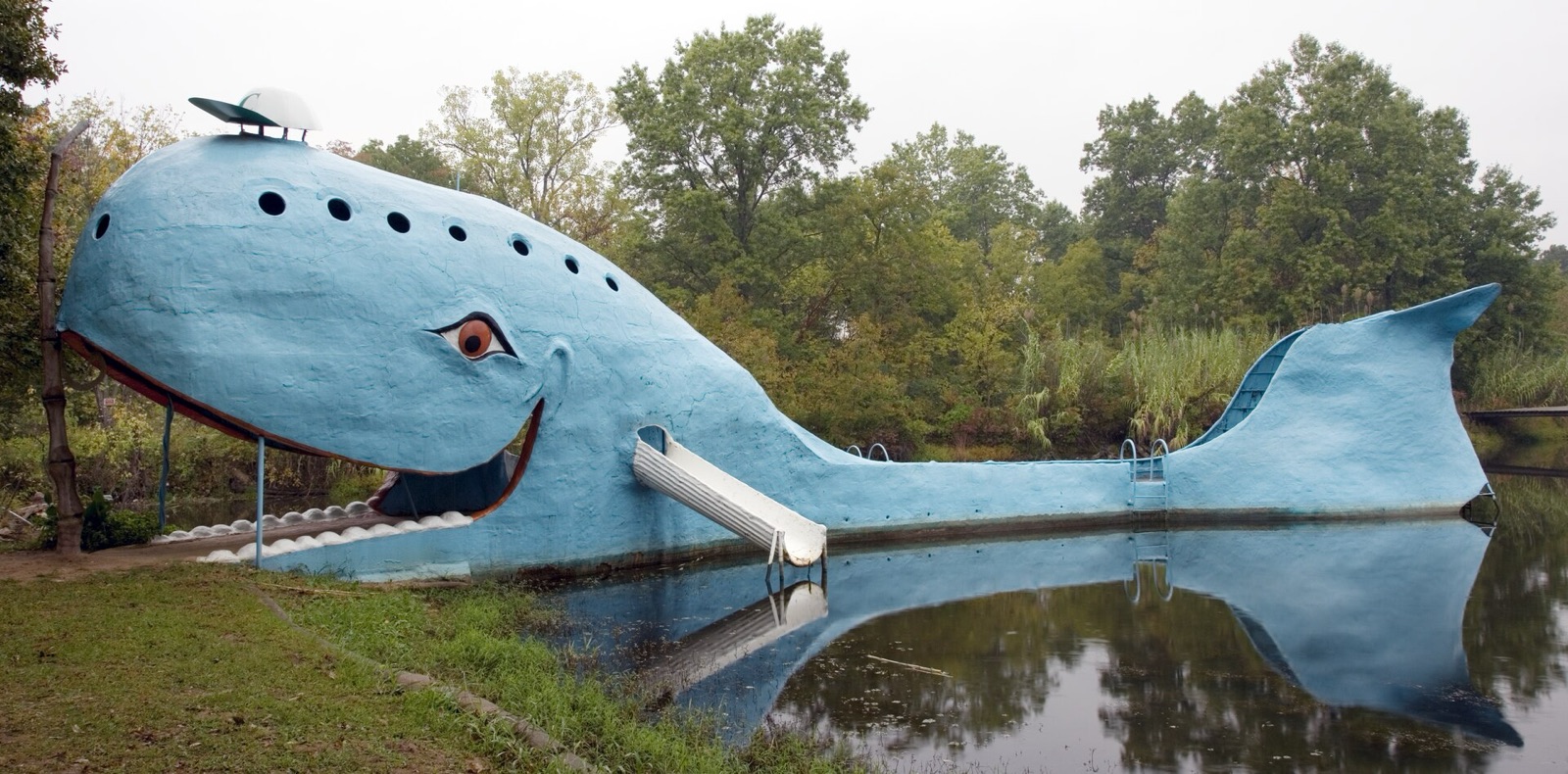
What stays for 2027 is the work the Centennial paid for. The Blue Whale of Catoosa has a new visitor center that opened on May 30, 2026. Tulsa has put up more than 90 new neon signs along its stretch, and there's a second, ceremonial Begin sign at Chicago's Navy Pier. The Oklahoma History Center's exhibit The Longest Stretch: Route 66 in Oklahoma runs through 2027. I cover all of it in my guide to Route 66 stops in Oklahoma.
Dates already on the 2027 calendar:
- First weekend in May: the Red Carpet Corridor Festival in Illinois and the Route 66 Fun Run in Arizona, both held every year on that weekend.
- August 13 and 14: the Birthplace of Route 66 Festival car show in Springfield, Missouri.
- September 17 and 18: the Route 66 Cruisin' Reunion on Euclid Avenue in Ontario, California.
One work zone to know about: San Bernardino County's contract to replace ten old bridges on Route 66 near Amboy, in the Mojave, was set to start in December 2025 and is expected to finish in April 2027. Check the county's road status before you plan the desert stretch. For the rest of the closures I know about, read Route 66 vs. I-40.
My guess is that 2027 will feel calmer than the Centennial year, with the improvements still in place. It is a guess, not a fact, so book the motels you care about early either way.
How the Field Manual helps with timing
Whatever month you pick, the risk is the same: an hour-long detour to a cafe that closed for the season, or a motel that changed hands since your guide was printed. That is why I built Route 66, The Definitive Field Manual on what we could check on the road: motels, diners and coordinates checked in April 2026, across 2,448 miles, 8 states, 169 maps and 105 GPS waypoints. Each state has 9 restaurants and 9 hotels on three budgets, so if your first choice is closed for the winter, you have others in the same state. The printed book works where your phone doesn't, which matters in the empty stretches of New Mexico and the Mojave.
The short version
Go in May or from mid-September through October. In spring, think about driving west to east, so you cross the desert before it heats up and reach Chicago once it has warmed. In fall, drive east to west. In summer, cross the Mojave at dawn and watch the afternoon storms in Arizona. In winter, keep a spare day for snow between Gallup and Williams, and call ahead before every stop you'd hate to miss. If you're still deciding which states to linger in, start with the state guides for Illinois, Missouri, Texas and California.